Satellite-to-Phone Networks Are Moving Beyond Emergency Texting
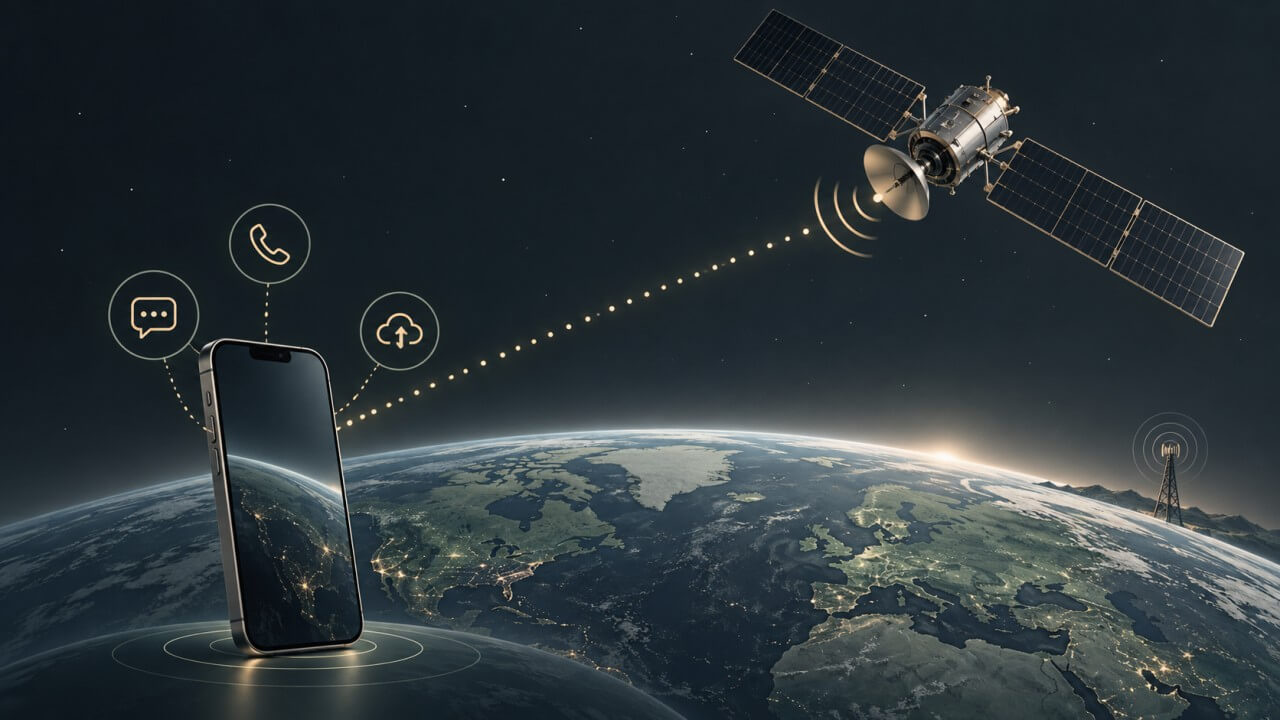
More than 26 million satellite texts were sent or received through Telstra during the first 13 months of its service. Average daily satellite connections also climbed sharply, rising to more than 200,000 after starting at around 80,000. More than 2.9 million users have connected through satellite at least once.
Those figures are already a little awkward for anyone still treating satellite connectivity as a niche emergency button.
More interesting is what happens if that 200,000 daily figure keeps climbing once satellite data becomes useful for more than texting. Messaging proved people will connect. Maps and weather may start proving how often they actually want to.
Telstra is now pushing that idea further. Lightweight satellite data is being opened to selected apps, including:
- Google Maps
- Apple Maps
- Signal
- Weather services
Apparently giving people an emergency satellite connection was only step one. Step two was discovering they would quite like Google Maps as well.
Satellite-to-phone is starting to look less like an emergency feature bolted onto a handset and more like another layer of the mobile network.
Emergency Texting Was Only Step One
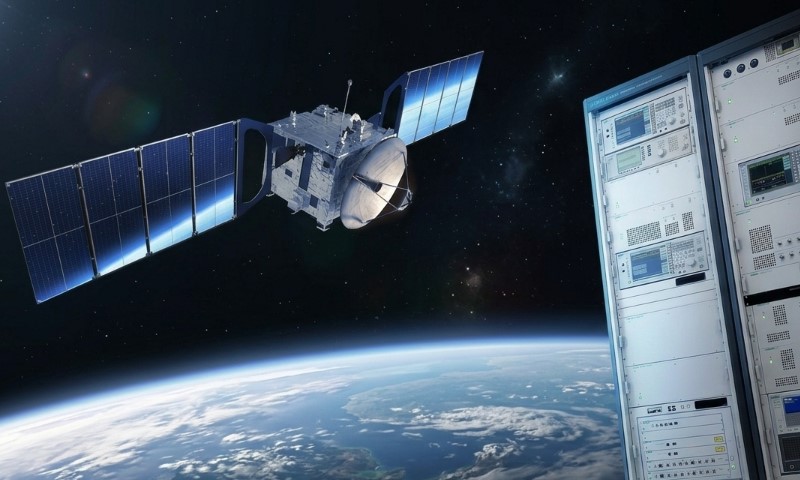
Early satellite smartphone services focused on jobs that use very little data. Text messages and emergency communications made sense because they did not require huge amounts of capacity.
Newer NR-NTN technology is expected to change that gradually. Earlier industry forecasts suggested rising satellite capacity could eventually support heavier services such as social media and even video calls.
Progress has started, although nobody should picture a 5G tower floating in orbit just yet.
Telstra currently supports navigation, weather and messaging apps over satellite. Globe has taken a similar route in the Philippines with Starlink, allowing texts, emergency alerts, location sharing, basic navigation, Viber and WhatsApp.
Such services matter because they change what losing cellular coverage actually means.
A dead zone used to be simple. Bars disappeared, apps stopped working and your phone became an expensive camera until coverage returned. Satellite access starts to complicate that old definition.
No cellular coverage may increasingly mean slower access to a smaller collection of services rather than no usable connection at all.
That distinction sounds modest. In practice, it could be one of the biggest changes in mobile coverage in years.
Ordinary Phones Are Becoming Satellite Devices
Specialist satellite phones once made the category easy to recognize. Bulky hardware, specialist subscriptions and a very specific reason for carrying one usually came with the package.
Mobile operators now seem interested in making that category quietly disappear.
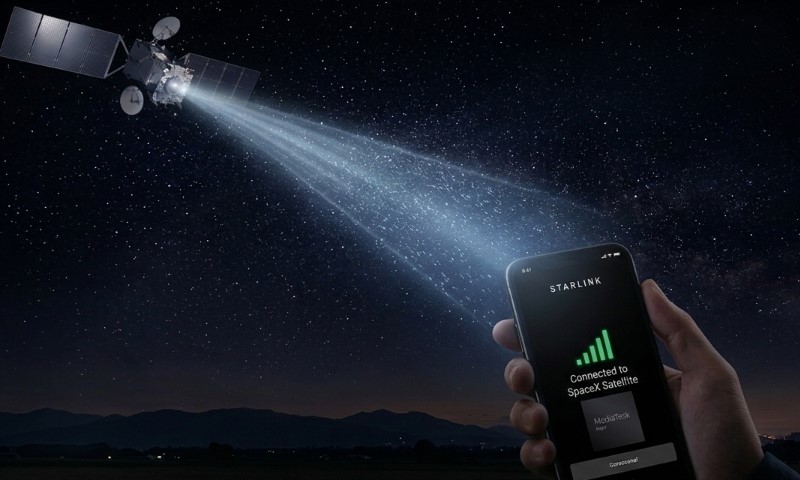
Globe’s service connects ordinary LTE smartphones directly to Starlink satellites without a dish, specialist handset or extra hardware. Prepaid satellite passes begin at $0.14.
Telstra takes a similar approach.
Compatible phones automatically connect once terrestrial coverage disappears and the handset has a clear view of the sky.
Supported hardware includes the iPhone 13 and newer models plus Samsung’s Galaxy S26 family, with more devices planned.
Commercial Starlink Direct-to-Cell service is already available in:
| Market | Status |
| Philippines | Commercial service available |
| United States | Commercial service available |
| New Zealand | Commercial service available |
| Australia | Partnership or trial |
| Japan | Partnership or trial |
| Canada | Partnership or trial |
| Chile | Partnership or trial |
| Peru | Partnership or trial |
| Switzerland | Partnership or trial |
Satellite phones used to be specialist equipment. Industry momentum now points toward turning the phone people already own into one.
Such a shift changes the sales pitch completely.
Consumers no longer need to decide if satellite connectivity is important enough to justify buying another device. Satellite access can simply appear when terrestrial service disappears.
If that model spreads, satellite capability may start to feel less like a premium feature and more like an expected part of a normal phone plan.
A Cell Tower in Orbit Is Still Not Broadband
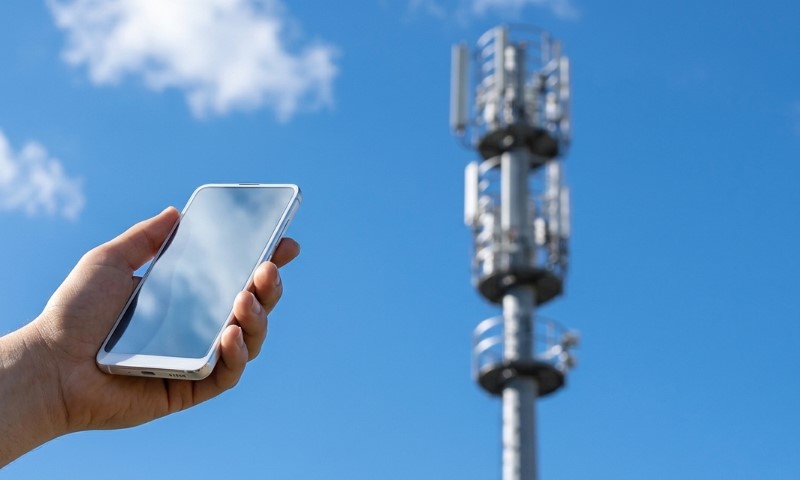
Direct-to-phone satellite access sounds dramatic, but current services are still built around relatively light tasks.
Most current offerings concentrate on:
- messaging
- maps and navigation
- weather
- location sharing
- other low-data applications
Telstra warns that maps and messages can take longer to load, while performance can change with:
- Location
- Surroundings
- Latitude
- Satellite position
Video and audio calls may occasionally work in supported apps, but users are specifically told not to depend on those functions.
Globe gives a similar warning. Its current service is not designed for video streaming, gaming, heavy downloads or conventional cellular voice calls.
Your phone may now be talking to a cell tower in orbit. Netflix can stay unimpressed for the moment.
Physics has not signed up for the marketing campaign. A smartphone still has a tiny antenna and limited power, while one satellite may be trying to cover an area large enough to contain several terrestrial networks.
Satellite capacity is also shared across huge areas; buildings can block signals, and a handset has far less power than a dedicated satellite terminal. Low-data services fit those constraints much better.
Future capacity could improve the experience considerably, especially as newer satellites and NR-NTN standards mature. Still, a useful satellite connection and a full-speed mobile broadband connection are two very different products.
Confusing them risks turning a genuinely useful technology into a marketing claim it cannot consistently support.
Operators Can Cover Gaps Without Building Another Tower

Economics may end up mattering more than the novelty.
Urban cell towers can spread their cost across thousands of customers. Remote towers still need land, electricity, backhaul, maintenance, and security, yet some may reach only a few hundred users or fewer.
That is not a particularly friendly spreadsheet.
Rural sites can produce only a fraction of urban revenue while costing considerably more to build and operate. Mobile operators have traditionally faced three unpleasant choices in those areas: build the tower anyway, find subsidies or leave coverage thin.
Satellite creates another option. Carriers can buy access to coverage in orbit rather than constructing terrestrial infrastructure across every difficult patch of geography.
Veon’s non-exclusive Starlink agreement shows how large that opportunity could become. Satellite connectivity could eventually reach as many as 150 million customers across Veon’s markets.
At that size, direct-to-phone satellite access is no longer an experiment hiding in the corner of telecom. It is being pointed at a customer base larger than the population of most countries.
Get enough operators doing that and satellite coverage stops being the strange extra on the network map. It becomes something planners have to account for every time they find another expensive patch of empty countryside.
Another question follows quickly.
If customers begin expecting satellite coverage inside ordinary mobile plans, bargaining power may shift toward companies controlling the satellite networks. Mobile operators could gain a relatively cheap way to fill rural gaps while also becoming more dependent on a small group of orbital infrastructure providers.
Revenue Forecasts Are Getting Much Larger
Earlier industry forecasts expected more than 175 million NTN mobile connections worldwide by 2030. Revenue was projected at roughly $16.3 billion, with a forecast compound annual growth rate of 76% between 2022 and 2030.
Newer estimates now put satellite NTN mobile service revenue at around $18 billion by 2031. More capable NR-NTN services are expected to account for 58% of total revenue by that point.
Forecasts are not guarantees. Satellite deployments slip, standards take time, hardware support varies and consumer demand has an irritating habit of ignoring PowerPoint.
Direction still matters, though.
A market heading toward hundreds of millions of connections probably cannot spend the next decade living entirely on stranded-hiker messages.
Revenue expectations increasingly depend on people using satellite connectivity for ordinary tasks, not just rare emergencies. Navigation, messaging, and weather access are a logical first step because they offer practical value without requiring enormous bandwidth.
If capacity keeps improving, app support could gradually expand.
My guess is that the next few years will be less about a sudden jump to satellite broadband and more about a steady increase in what phones can do after terrestrial coverage disappears.
That sounds less spectacular than “5G everywhere.” It may also be far more useful.
Losing a Tower May Stop Meaning Losing Connectivity
Cell towers can reuse spectrum efficiently across dense populations, provide much higher capacity and work better indoors. Satellites do something terrestrial networks struggle with: cover enormous geographic areas without placing equipment on every mountain road, farm or remote coastline.
Each network is good at a different problem.
Terrestrial systems handle density. Satellites fill geography.
Resilience adds another reason to combine them. During bushfires in Victoria, Telstra recorded a three-fold increase in satellite connections after fire damage and power failures affected parts of its terrestrial network.
That example matters because emergency use is no longer limited to a person getting lost in the wilderness. Satellite access can also become a backup layer when ordinary infrastructure fails.
Losing one tower, one power line, or one local backhaul route does not automatically have to mean total disconnection.
Next milestone, then, probably has very little to do with satellites replacing 5G. A more realistic goal is making connectivity harder to lose in the first place.
If current progress continues, the strange part may not be that a phone occasionally talks to space.
“No signal” may simply start sounding increasingly old-fashioned.
Figures reflect the sources and time periods cited in this story. It is general information, not financial or investment advice.