Robotaxis Are Moving From Test Fleets to Paid Rides Across More U.S. Cities
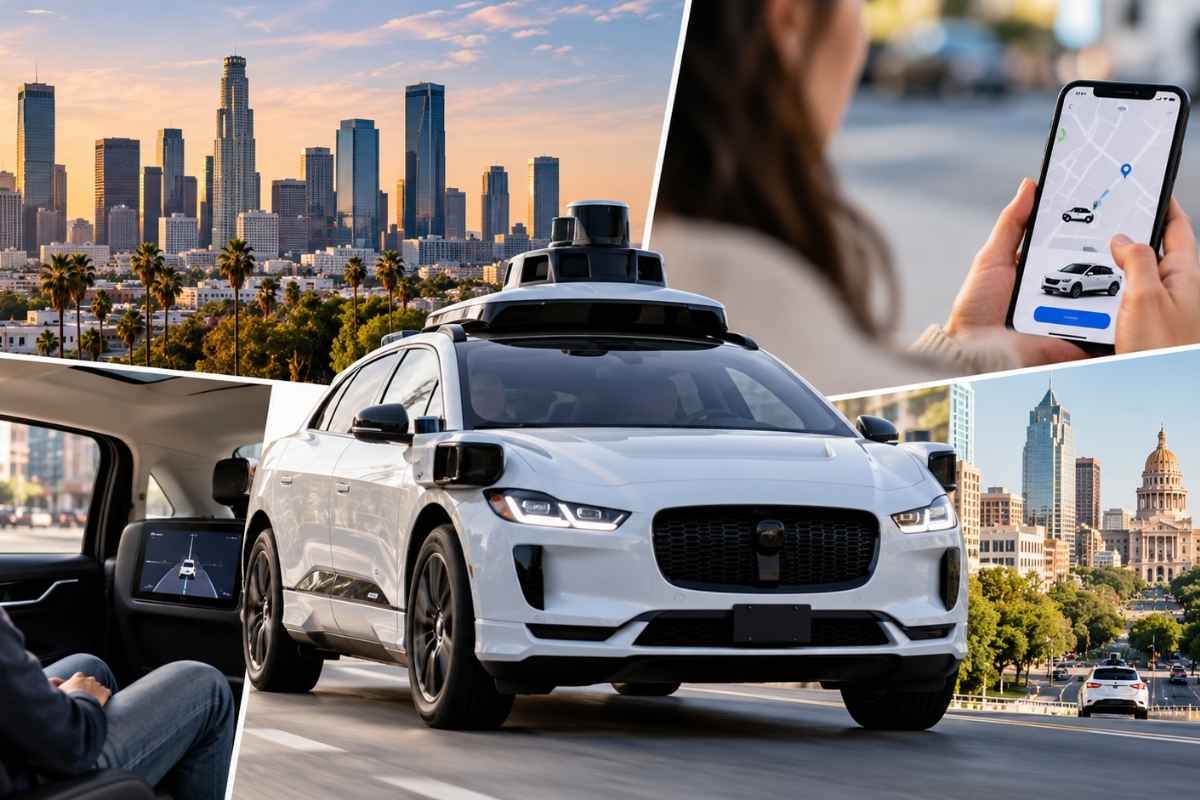
Half a million fully autonomous rides every week is no longer an experiment with a few brave passengers and an army of engineers watching dashboards. Waymo is now completing more than 500,000 paid driverless rides per week, roughly twice the 250,000 weekly rides it reported in May 2025. About 15 million rides were completed during 2025. Keeping today’s weekly rate for a full year would push that figure to roughly 26 million.
Robotaxis spent years looking like transportation’s most expensive science project. At half a million paid rides a week, somebody has finally started charging admission. Expansion is moving quickly too.
Waymo opened operations in Denver, San Diego and Tampa on September 1, bringing its commercial city count to 14. By September 24, that figure had reached 15. Management wants even more. Waymo has set a target of 1 million rides per week by the end of 2026.
But can operators keep adding rides without costs, operational headaches, and technical problems growing just as quickly?
Waymo Is Scaling Faster Than Its City Count Suggests
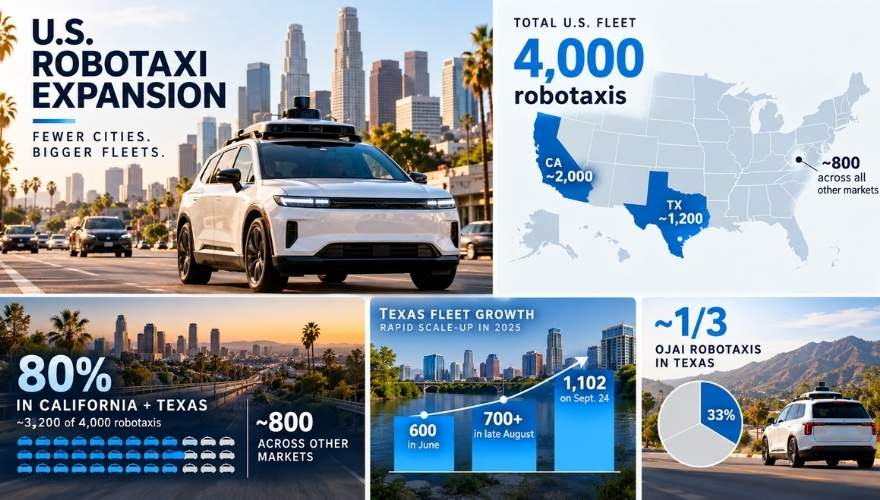
Fifteen cities sounds surprisingly national. Vehicle distribution tells a more concentrated story. Waymo operates roughly 4,000 robotaxis, with about 80% located in California and Texas.
That leaves only around 800 vehicles divided among all its other markets. Texas offers a particularly dramatic example of how quickly deployment can accelerate once Waymo decides a market deserves more cars. Registered autonomous vehicles in Texas reached 1,102 on September 24, an increase of 49% in less than a month.
Growth had been much slower earlier in the summer. Texas had roughly 600 Waymo vehicles in June and just over 700 by late August. September apparently arrived, and somebody found the fleet expansion button. Vehicle mix is changing at the same time.
Roughly one-third of Waymo’s Texas fleet now consists of Ojai robotaxis, modified Zeekr RT vehicles equipped with Waymo’s sixth-generation autonomous system.
City totals can therefore make robotaxi expansion look broader than it currently is. Waymo is adding markets, but most of its physical fleet is still packed into two states.
If deployment keeps following that pattern, city count may become one of the less useful numbers for judging robotaxi scale. Fleet density could tell us much more.
Zoox Shows How Test Markets Become Commercial Ones
Zoox offers another reminder that a robotaxi company being present in a city does not necessarily mean residents can open an app and buy a driverless ride. Paid rides began in Las Vegas in August 2026 after Zoox had already operated free passenger programs in Las Vegas, San Francisco, Austin and Miami.
Expansion is now reaching Houston and San Diego, pushing Zoox’s U.S. presence to 12 locations. Initial operations in those two cities, however, involve vehicles with human drivers conducting mapping and testing.
Las Vegas is still Zoox’s only paid market. San Francisco continues to offer free rides to selected passengers. Being present in 12 cities and selling robotaxi rides in 12 cities are very different statistics. Mapping vehicles matter because commercial autonomous operations require companies to learn a city in considerable detail before passenger rides begin.
Road geometry, pickup locations, construction behavior, and traffic patterns all need to become predictable enough for repeated operation.
Geofencing Is Still Doing Most of the Heavy Lifting
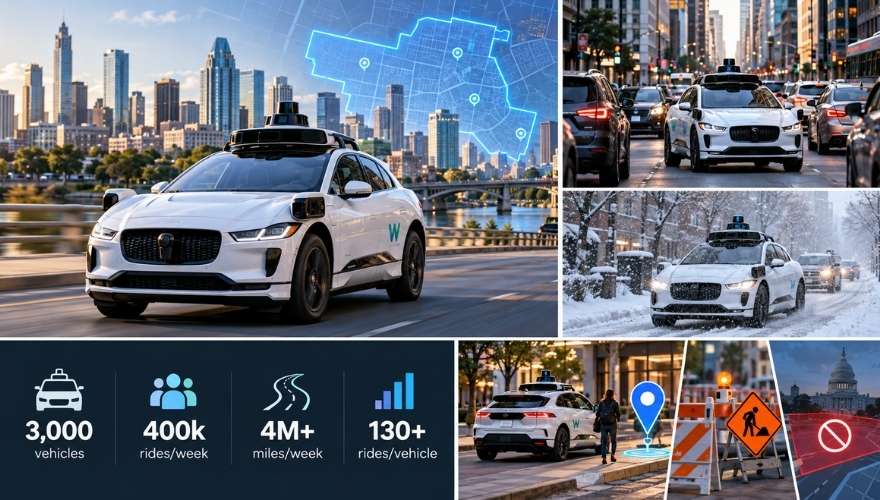
Companies have become much better at making their approved operating zones larger. Commercial fleets still work inside prepared areas where operators can study road layouts, pickup points, traffic rules, charging requirements, construction patterns, and local procedures before scaling passenger trips.
Scale inside operating zones is already considerable. Around 3,000 Waymo vehicles were completing more than 400,000 rides and traveling more than 4 million miles per week in February 2026.
That works out to more than 130 rides per vehicle each week on average. At that level, geofencing stops looking like a tiny demonstration zone. Thousands of vehicles can move millions of miles while staying inside carefully prepared operating areas. Yet boundaries still matter.
Moving into a new city means rebuilding much of that operating knowledge around a different road network, different local rules and different traffic behavior. Snow, unusual intersections and construction crews do not care how impressive last quarter’s ride total looked.
Industry progress is therefore real, but narrower than the phrase “self-driving anywhere” might suggest. Companies have become very good at making “somewhere” bigger.
Commercial Scale Creates Bigger Technical and Regulatory Problems
Around 4,000 Waymo vehicles were recalled in June over risks tied to construction zones. A separate recall involving roughly 3,800 vehicles came one month earlier after software behavior created a risk that vehicles could stall in standing water. Those numbers are almost the size of Waymo’s current fleet.
Regulators have also examined individual incidents involving unusual or sensitive situations. One investigation followed a Waymo vehicle passing a stopped school bus. Another involved a vehicle striking a child near a Santa Monica elementary school and causing minor injuries. None of that automatically tells us how Waymo compares with human motorists across millions of miles.
Company analysis covering 220.6 million rider-only miles through March 2026 reported 82% fewer injury crashes compared with comparable human driving inside Waymo operating areas.
That is an important number, but it needs context. Analysis was produced by Waymo and applies to locations where Waymo already operates. It should not automatically be treated as proof that identical results would appear in every city, road type or weather condition.
Still, 220.6 million autonomous miles gives researchers and regulators far more evidence to examine than early robotaxi trials ever could.
Scale cuts both ways. More miles can help demonstrate safety performance across a larger sample. More vehicles also mean a software problem can affect thousands of cars at once.
At small scale, a strange edge case is an engineering headache. At half a million rides per week, it can become a recall, a federal investigation and a very expensive afternoon.
Next Race Centers on Density, Cost and Repeatability
Robotaxi companies are no longer competing only to prove that their cars can move passengers without a human touching a steering wheel. Commercial economics are becoming much harder to ignore.
A Much Bigger Market Is Being Priced In
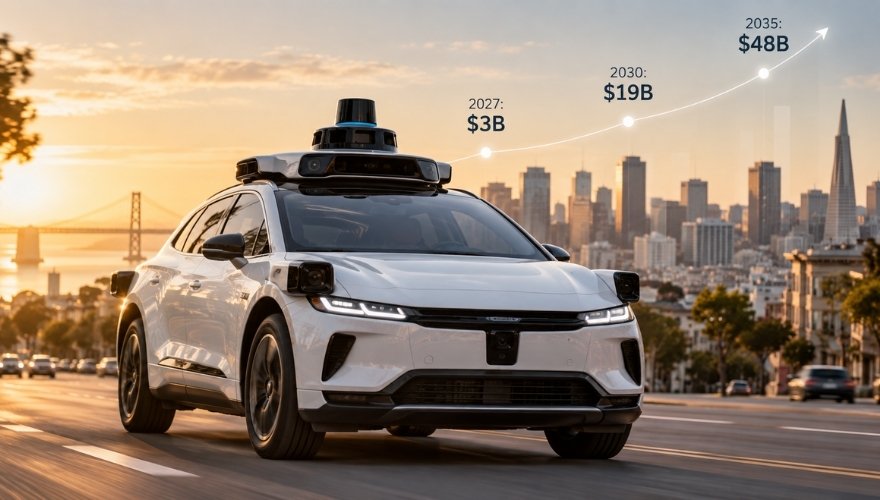
Goldman Sachs Research forecasts that the U.S. robotaxi market could grow to about $3 billion in 2027, $19 billion in 2030 and $48 billion by 2035.
Forecasts can miss badly, especially in technology markets where expectations enjoy sprinting ahead of reality. Still, numbers that large explain why companies are expanding so aggressively now.
Growth implied by that forecast is not subtle:
-
- Market size would rise by about $16 billion between 2027 and 2030.
- Another $29 billion would be added between 2030 and 2035.
- A $48 billion market in 2035 would be 16 times larger than the projected 2027 market.
Nobody gets that growth simply by proving the car can drive itself. Companies need enough vehicles on the road, enough passengers using them and enough cities producing repeatable economics.
Cheaper Robotaxis Still Need to Be Cheap
Waymo’s newer Ojai robotaxi is intended to lower vehicle costs, but its underlying Zeekr RT platform is built in China.
U.S. tariffs are raising import expenses at exactly the moment Waymo wants to add large numbers of them. MoffettNathanson estimates Waymo is on pace to import 5,100 Ojai vehicles by year-end.
That number is especially large beside Waymo’s current fleet of roughly 4,000 robotaxis. Adding thousands of newer vehicles could materially change how many cars Waymo has available for existing and future markets. Manufacturing economics become much harder to ignore at that scale.
Saving money on each vehicle matters a lot more when the purchase order has four digits. A vehicle designed partly to make large-scale deployment cheaper becomes less helpful if import costs start eating into those savings.
One Million Weekly Rides Is an Operations Problem Too
Doubling weekly rides again will require more than dropping extra cars into parking lots. Waymo’s target of 1 million rides per week would put the company at roughly 143,000 rides per day.
Sustaining that pace for a full year would equal about 52 million rides.
Getting there means scaling several things at once:
| Scaling Area | Operational Need | Why It Matters |
| Charging | More charging capacity | Vehicles cannot spend too much time out of service |
| Maintenance | More cleaning, inspections, repairs, and routine servicing | Larger fleets create more physical upkeep |
| Local Operations | Clear procedures for unusual road events, breakdowns, and emergencies | Bigger fleets encounter more edge cases in daily operation |
| City Coordination | Practical rules for pickup areas, road disruptions, and public-agency interactions | Expansion requires coordination outside the vehicle itself |
| Software | Reliable handling of routine traffic plus rare situations | Millions of trips create more chances for unusual scenarios to appear |
Waymo’s 500,000 weekly rides show that paid autonomous transportation has moved well past isolated trials. Fifteen commercial cities also show how quickly its geographic footprint is growing.
Yet 80% of Waymo’s fleet sitting in California and Texas shows how much work is still concentrated in a few places.
Next milestone is 1 million rides per week. If that pace continues, the interesting question may stop being if people will pay to ride in a driverless car.
More attention may shift toward how many cities can support dense fleets, how cheaply companies can add vehicles and how consistently the technology performs once millions of weekly miles become ordinary. Cities have edge cases. Apparently spreadsheets do too.
Figures reflect the sources and time periods cited in this story. It is general information, not financial or investment advice.