AT&T Is Retiring Copper While Customers Are Still Using It
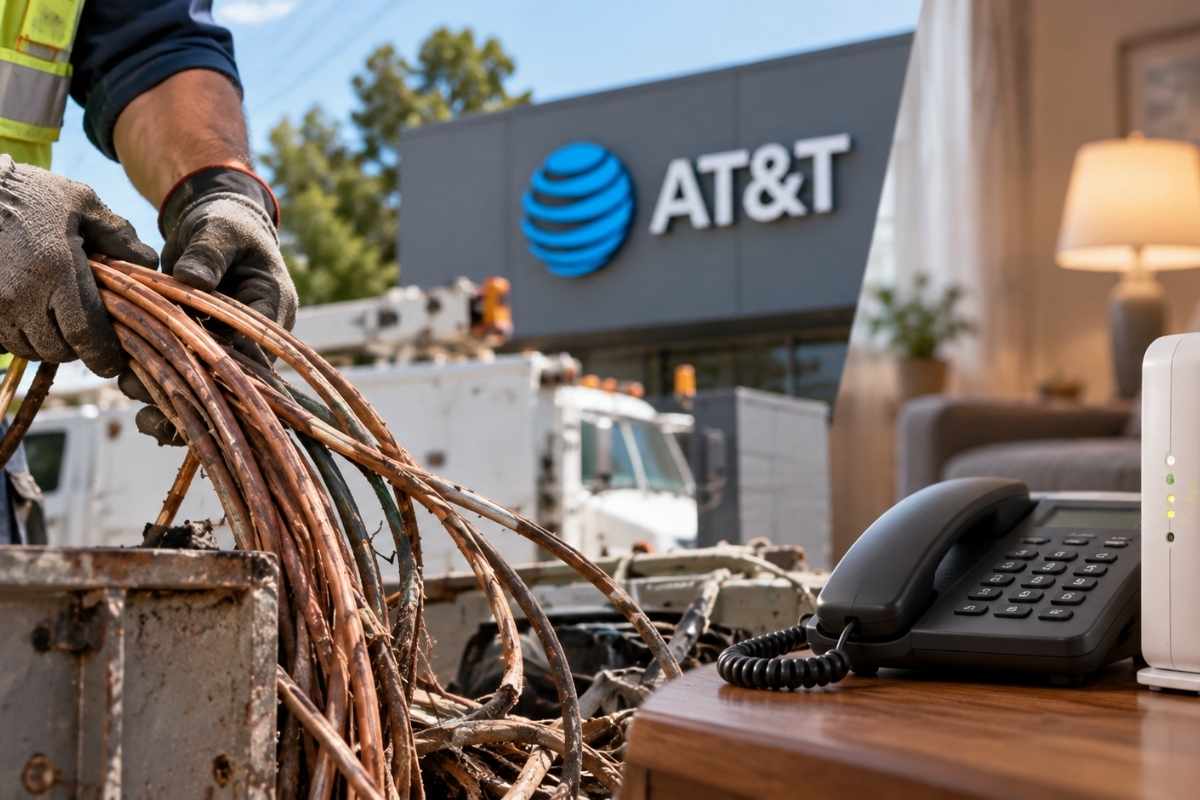
Copper is starting to look like an endangered species, except plenty of customers are still living inside the habitat.
AT&T has already started dismantling parts of its old copper network, even though tens of thousands of active customers are still connected to it. A recent FCC filing seeks permission to discontinue TDM/POTS service on or after November 15, 2026, affecting roughly 90,000 customers across parts of 18 states.
That filing is only one piece of a much bigger shutdown.
AT&T plans to retire copper-based services across most of its footprint by the end of 2029. Roughly 1,300 central offices are expected to be retired as customers shift to fiber and wireless alternatives.
Put differently, copper is not waiting around for a ceremonial retirement party.
AT&T Is Shutting Down Copper Before Everyone Has Left
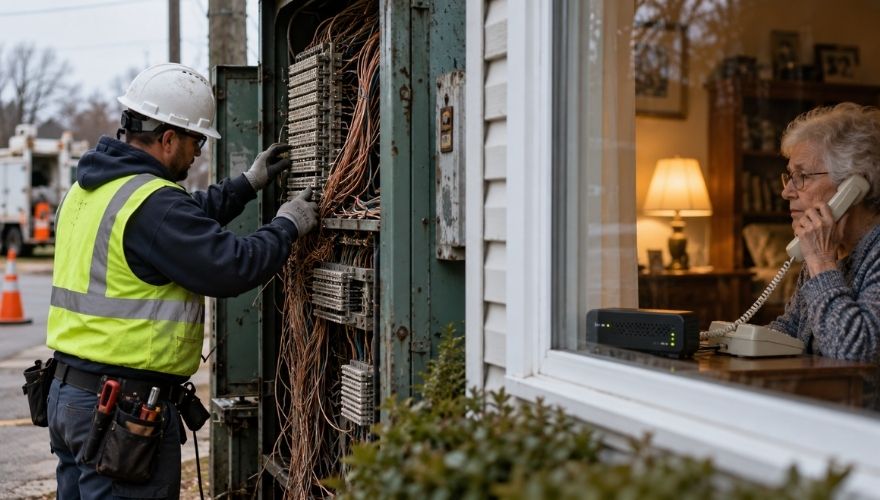
About 90,000 customers may sound tiny next to AT&T’s total customer base.
Scale changes once those people are spread across 18 states and tied to physical infrastructure that has to be maintained mile by mile.
Three numbers show how much larger the retirement plan is than a single filing:
- Roughly 90,000 customers could be affected by the November 15, 2026 service discontinuation.
- About 1,300 central offices are part of AT&T’s broader retirement plans.
- More than 85% of AT&T’s footprint could be free of copper-service obligations by the end of 2026, while actual discontinuation could reach roughly 30%.
Copper networks do not shrink neatly when subscriber counts fall.
One customer can disappear with a phone call. Miles of cable, conduits, switching equipment, and central-office hardware do not vanish nearly as politely.
That difference helps explain why AT&T is pushing so hard to accelerate retirement.
A communications network built for millions of copper customers becomes increasingly awkward when only a small fraction still uses it. Current filings and decommissioning work show that many customers will face the change much earlier.
Keeping Copper Alive Is Getting Ridiculously Expensive
Around $6 billion a year is reportedly going toward maintaining AT&T’s copper network across a local-service footprint of roughly 500,000 square miles. Numbers on active copper users vary depending on the dataset.
One estimate puts copper voice users at about 5% of customers. Another puts the share below 3%.
Those figures should not be mashed together as if they came out of one spreadsheet, but both point in the same direction. AT&T is spending billions to support an enormous physical network used by a very small slice of its customers.
Even 5% sounds small. Pair it with half a million square miles of infrastructure, and the problem gets much bigger.
AT&T is effectively operating two fixed networks at once. One is modern fiber. Another is aging copper that still requires maintenance crews, central offices, field repairs, and equipment support even as customer counts keep falling.
Fiber has the much easier economic story. It carries far more data, supports modern broadband services, and gives AT&T a network it actually wants to keep investing in.
Copper has started to look like a very expensive apartment after almost everyone moved out.
Copper Users Are Not Just People Making Landline Calls
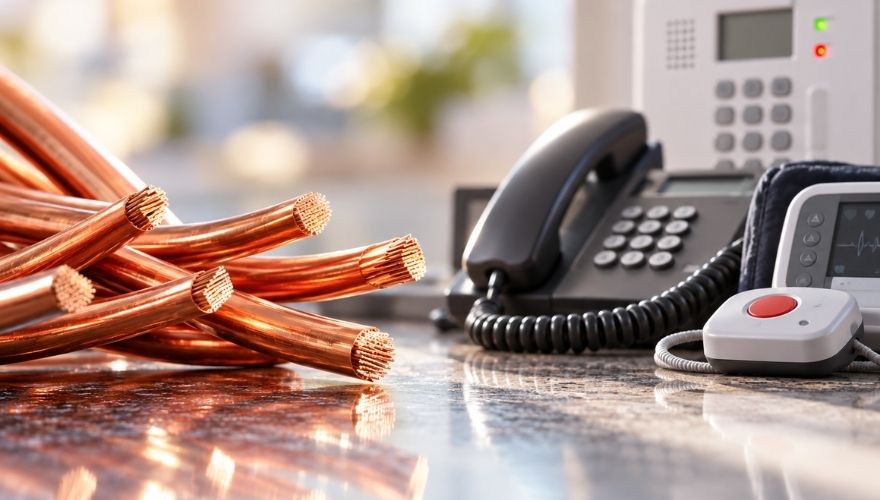
Anyone picturing a retiree refusing to surrender a beige kitchen phone is missing much of the story.
Plenty of difficult migrations involve equipment designed decades ago around an analog telephone connection. Nobody has to feel nostalgic about a dial tone for copper retirement to become a problem.
Copper can still sit underneath equipment such as:
- Fire alarm panels
- Elevator emergency phones
- Security systems
- Emergency call boxes
- Fax machines
- Medical monitoring equipment
- Point-of-sale backup connections
Sometimes the customer is basically an elevator.
AT&T says fax machines, security alarms, and medical monitors can keep operating after phone service is transferred to fiber. Extra work may still be required, especially around power.
Compatibility matters too. Equipment designed around an analog electrical interface may not behave exactly the same when attached to newer phone hardware.
Some life-safety equipment cannot simply be connected to an ordinary consumer VoIP line and assumed to meet compatibility or compliance requirements.
An alarm panel that refuses to cooperate is not the same problem as a printer that needs another reboot.
Fiber Is Better Technology, but It Does Not Act Exactly Like Copper
Copper has one trick fiber does not naturally copy: it can carry electrical power down the telephone line.
Traditional copper phone lines are loop-powered, meaning electricity is supplied through the network itself. Older fire alarms, elevator phones, security systems, and similar equipment were often designed around that setup.
Fiber works differently.
Optical cable moves data using light and offers dramatically more capacity. Electrical interference is much less of a problem. Broadband performance is in another category entirely.
Power is the catch.
AT&T says customers moved to fiber can keep basic telephone functions and continue using existing phones, but fiber equipment installed at a business requires electricity.
Glass is considerably better at moving data. It is considerably worse at sending electricity to an alarm panel.
That distinction matters most in exactly the places where a phone connection is expected to work during a problem rather than during an ordinary Tuesday afternoon.
AT&T Is Already Telling Customers to Move
Anyone treating 2029 as the date when all of this suddenly begins is several steps behind.
AT&T stopped accepting many new copper installations, moves, and changes across nearly 20 states on October 15, 2025.
By June 2026, permanent copper decommissioning had begun in around 500 wire centers, equal to roughly 10% of AT&T’s network footprint.
Ten percent is already physical retirement, not another corporate target sitting five slides into an investor presentation. If that work keeps spreading, the practical deadline for many customers will arrive long before 2029.
As AT&T moves forward with its copper retirement plans, some customers are questioning how the transition will affect their existing phone service and everyday needs.
Timing also differs by market. Some businesses may receive only around 180 days of notice before a shutdown date.
For a company with hundreds of locations and different equipment at each site, six months can disappear alarmingly fast.
2029 is the destination, not everyone’s deadline. Some customers are already discovering that their particular train leaves much earlier.
Hardest Copper Customers May Be Last in Line
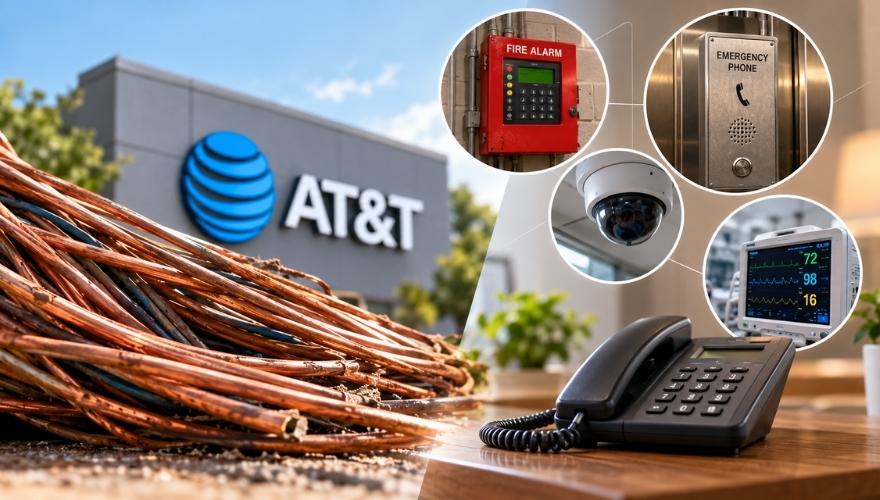
A basic phone line that can be replaced with fiber or wireless service is relatively straightforward. Problems become more interesting once copper is attached to equipment designed around very specific electrical and signaling characteristics.
Every easy line AT&T removes improves the economics. Unfortunately, it also leaves a higher concentration of awkward ones behind.
That creates a neat little contradiction.
Copper becomes less economical for AT&T to maintain at exactly the same time the customers still attached to it may be the hardest ones to move.
If AT&T reaches its 2029 target, copper could become a technological relic quickly after more than a century in active use.
My guess is that the hardest part will not be persuading ordinary phone customers to switch. Bigger friction is likely to come through equipment that nobody thought much about until somebody tried unplugging it.
Closing Thoughts
AT&T is reportedly spending about $6 billion every year maintaining roughly 500,000 square miles of copper infrastructure for a customer base that third-party estimates now place in the low single digits.
That makes retirement economically easy to explain.
At this stage, copper itself is easy to call obsolete. Getting every dependency off it may be the part that proves much harder.
Figures reflect the sources and time periods cited in this story. It is general information, not financial or investment advice.