Starlink Is Starting to Look Like a Competitor to America’s Wireless Carriers
Sixty-five megahertz can change the tone of a conversation pretty quickly.
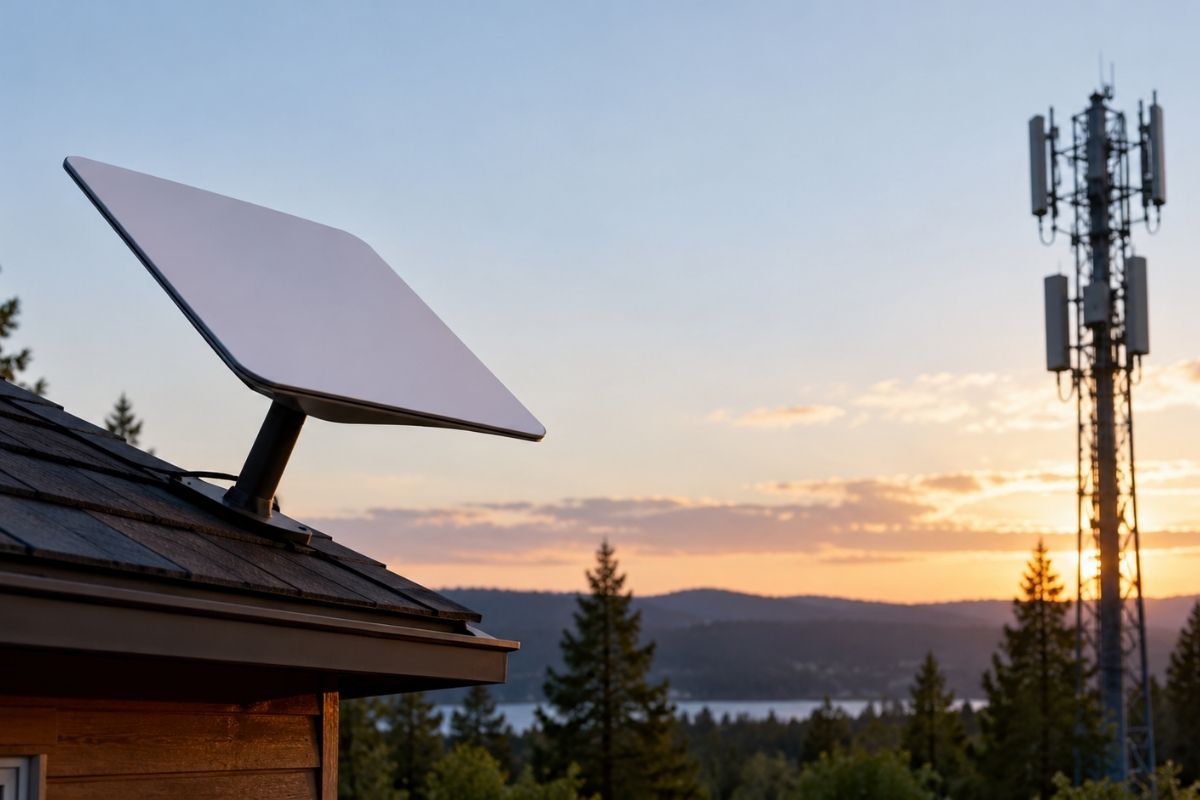
Starlink Mobile currently works with about 5 MHz of spectrum through partnerships with mobile operators. SpaceX’s EchoStar deal gives it access to 65 MHz of nationwide spectrum, while a next-generation satellite system is expected to provide roughly 10 times more capacity.
Combine those two changes and SpaceX says Starlink Mobile could become around 100 times more capable than today’s service.
That is still a company claim, not a result somebody has measured across millions of phones. Still, companies generally do not spend heavily on nationwide spectrum because they enjoy collecting licenses.
SpaceX plans to start launching its new satellites in 2027, with commercial service targeted for late 2027.
Starlink began as connectivity your phone might find when ordinary cellular coverage disappeared.
SpaceX now looks increasingly interested in making sure you do not need that ordinary network quite as much.
Starlink Is Starting to Look Less Like a Backup Network
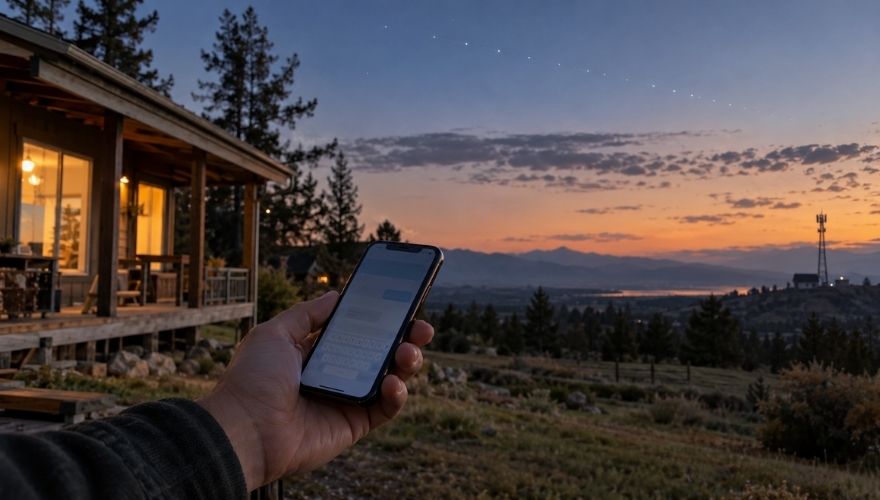
Direct-to-device satellite service initially had a fairly easy job description: fill the dead zones.
Messages in remote areas were useful. Emergency connectivity was useful. A satellite connection appearing when terrestrial coverage vanished made plenty of sense without threatening anybody’s monthly phone plan.
Something bigger is now taking shape.
Current Starlink Mobile service has roughly 5 MHz of spectrum available through carrier partnerships. Access to 65 MHz changes how much capacity SpaceX can realistically put behind the service.
Satellite capacity matters just as much. Next-generation hardware is expected to provide roughly 10 times the satellite capacity available today.
SpaceX arrives at its 100-times-more-capable claim by combining those gains.
Real networks are messier than multiplication on a presentation slide, of course. Capacity has to be shared, devices have different radio capabilities, local demand varies, and satellites do not magically erase physics because an executive put a larger number on a chart.
Still, a jump of that size changes what Starlink Mobile is trying to become.
SpaceX Is Openly Coming After AT&T, Verizon and T-Mobile
Around 650 Starlink satellites currently support direct-to-device connectivity.
Existing service already allows messaging along with voice and video calls through apps including WhatsApp and Signal. T-Mobile buys wholesale satellite connectivity as part of its coverage strategy.
That relationship gets slightly awkward once SpaceX starts talking about taking customers directly.
Plans now include terrestrial infrastructure and a core network capable of supporting a full mobile service rather than simply supplying satellite capacity to existing carriers.
SpaceX president Gwynne Shotwell has pointed to roughly $600 billion in combined annual revenue generated by AT&T, Verizon and T-Mobile, saying SpaceX expects to win some of their customers.
Six hundred billion dollars is a fairly effective way to explain why a satellite company suddenly finds mobile plans interesting.
Elon Musk has also argued that Starlink could eventually offer higher bandwidth and better connectivity than current cellular networks.
At around the 51-minute mark, Gwynne Shotwell discusses this in more detail. You can watch the clip here.
Satellite coverage has one obvious trick terrestrial networks cannot copy cheaply: it can reach huge areas where building another tower makes little financial sense.
Starlink’s Network Would Not Look Like a Normal Carrier
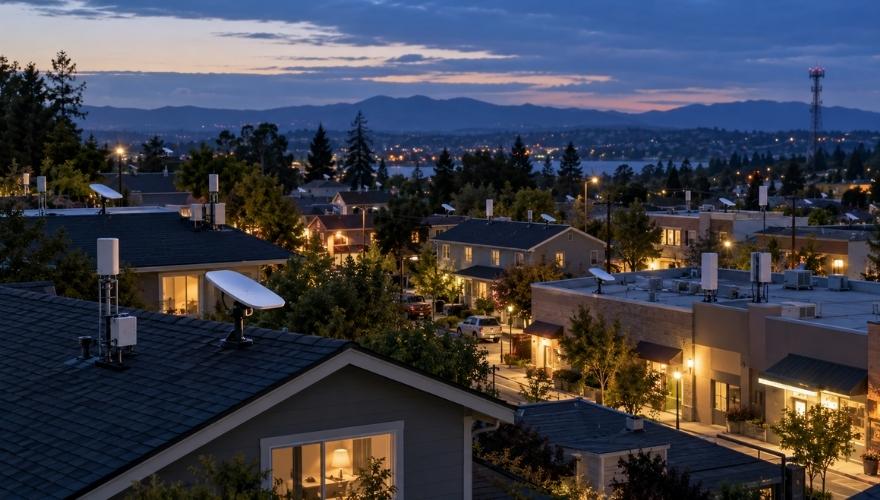
Trying to copy Verizon tower by tower would be a spectacular method for setting money on fire. SpaceX seems interested in another route.
Shotwell has discussed attaching small cellular base stations, sometimes called femtocells, to equipment already hosting Starlink dishes. Musk has described a model built around large numbers of smaller stations installed across rooftops and businesses.
Traditional macro towers cover large areas but cost substantial amounts to build, connect and maintain. Smaller cells cover less territory, but a dense network of them can add substantial capacity in populated areas.
Starlink also has something a brand-new wireless entrant normally lacks: millions of existing customer locations.
But how realistic is it for Starlink to become a full-fledged cellular network? Here’s a breakdown of the technical, regulatory, and business challenges standing in the way.
12 Million Broadband Customers Change the Math
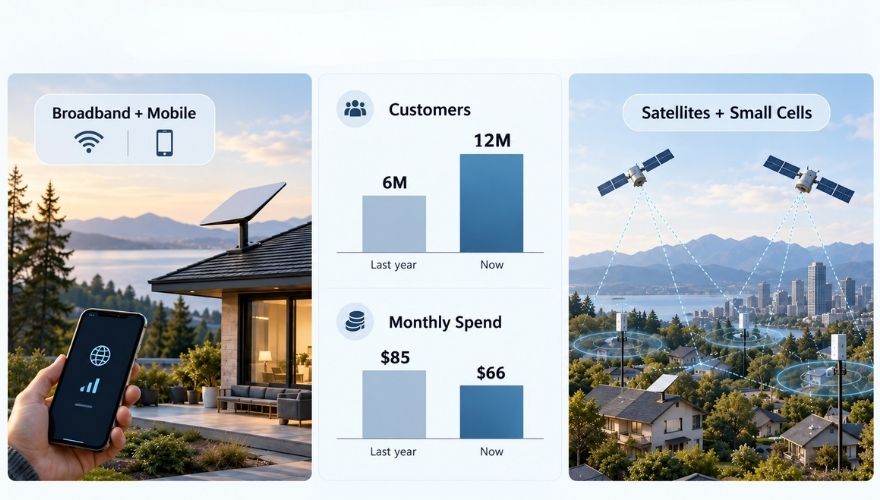
Around 12 million customers now use Starlink broadband, double the customer count recorded a year earlier.
Scale like that creates possibilities most new mobile entrants would love to borrow.
A household already paying for Starlink broadband becomes an obvious target for a mobile bundle. Existing equipment could also create installation sites for at least part of a terrestrial network.
Average customer spending provides another interesting clue.
Starlink broadband customers paid an average of $66 per month during Q2, compared with $85 a year earlier.
Lower average revenue per user can mean several things, including geographic expansion, pricing changes and customer mix. It also suggests SpaceX has already shown some willingness to accept less monthly revenue per customer in exchange for greater scale.
Mobile bundles could push that logic further.
Internet plus mobile is hardly a new idea. Cable companies have spent years selling wireless plans alongside home broadband. SpaceX would approach the same formula with satellites overhead and small cells underneath.
I would not be surprised to see bundling become one of its more aggressive tactics if a consumer mobile launch arrives.
Selling another service to someone already sending you money every month is generally much nicer.
But how realistic is it for Starlink to become a full-fledged cellular network? Here’s a breakdown of the technical, regulatory, and business challenges standing in the way.
Numbers Are Getting Serious, but the Gap Is Still Enormous
Sixty-five megahertz sounds huge until somebody places 1,100 MHz next to it. Major US wireless operators collectively had around 1.1 GHz of licensed spectrum allocated to them at the beginning of 2025.
SpaceX therefore has much more mobile spectrum than it previously did, but established carriers still operate with vastly larger holdings spread across multiple frequency bands.
Spectrum is only part of the gap.
AT&T, Verizon and T-Mobile have spent roughly three decades building terrestrial networks. Towers, fiber links, switching systems, spectrum licenses, billing platforms, customer support and retail operations did not materialize overnight.
SpaceX may have identified a faster route into cellular infrastructure. Nobody has shown that its shortcut can produce equivalent coverage and capacity at national scale.
SpaceX Still Needs a Ground-Network Shortcut

Analyst Craig Moffett has argued that building a competitive direct-to-consumer mobile service within five years would be extremely difficult without an MVNO agreement providing baseline terrestrial coverage.
You can watch Moffett break down the core reasons behind his skepticism regarding satellite and wireless competition in this Instagram Reel clip by The Information.
View this post on Instagram
Such an agreement could solve one of SpaceX’s nastiest early problems.
Satellite coverage can reach enormous areas, but dense cities consume extraordinary amounts of mobile capacity. Small cells could help, though installing enough of them to match established networks would still require capital, sites and time.
SpaceX has not disclosed a price tag for that terrestrial rollout.
Cost may become one of the most important numbers in the entire story.
Finding spectrum is difficult. Launching satellites is difficult. Giving millions of customers reliable service during rush hour in New York, Los Angeles or Chicago is a different species of difficult.
SpaceX has solved expensive engineering problems before. Investors may happily give it room to try another one.
Physics and network economics will still expect payment.
Carriers Are Preparing for the Satellite Era TooLTE
Nobody at America’s major wireless carriers has been sitting around assuming satellites will politely stay in space.
T-Mobile already uses Starlink connectivity to extend service into places its terrestrial network cannot cover. AT&T and Verizon have partnerships with AST SpaceMobile instead.
All three major US carriers have also announced a joint venture designed to pool spectrum for satellite-to-phone connectivity.
Competition is developing on two levels at once.
Carriers want satellites to improve their existing networks. Satellite companies increasingly want direct relationships with customers who currently buy service through those carriers.
T-Mobile CEO Srini Gopalan has argued that concern about satellite operators is exaggerated, predicting that satellite connectivity will complement terrestrial networks rather than replace them.
As journalist Kieran Smith shared in his recent post, you can read more about these industry insights and the full discussion there
That case has plenty of technical logic behind it.
Dense ground networks can reuse spectrum across thousands of cells. Satellites have much larger coverage areas and face tighter capacity constraints. Cities full of people streaming video are exactly where ground networks have their strongest structural advantage.
Yet T-Mobile also finds itself buying coverage through SpaceX while SpaceX prepares infrastructure aimed at attracting mobile customers directly.
Telecommunications has produced stranger business relationships, but not many with better potential for awkward earnings calls.
Satellite connectivity does not need to replace terrestrial mobile networks to matter.
Signals Worth Watching Next
A few developments would show that SpaceX is moving past the experimental stage:
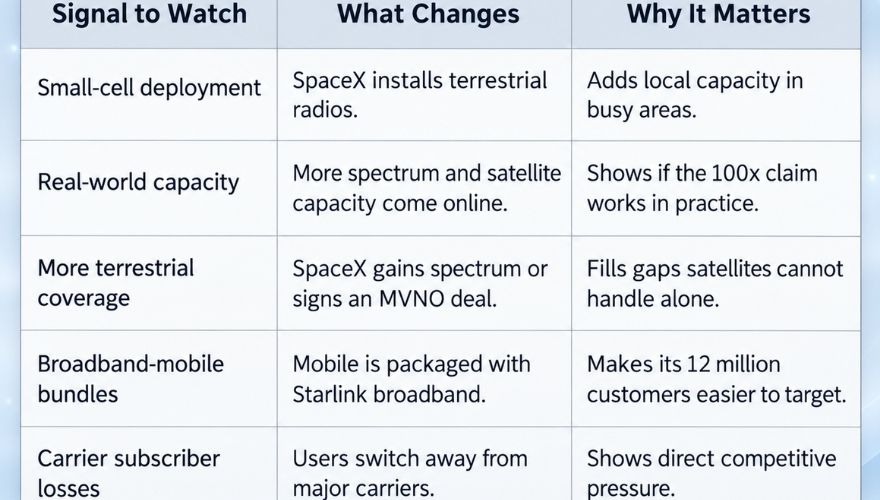
Until those signals appear, Starlink occupies a strange middle ground.
It is too small in mobile to compare directly with America’s established nationwide carriers, yet increasingly too well funded, too well supplied with spectrum and too ambitious to describe as a simple emergency satellite service. Starlink is not America’s fourth major wireless carrier yet.
Give SpaceX nationwide spectrum, 12 million broadband customers, billions in connectivity revenue, hundreds of direct-to-device satellites and its own planned cellular infrastructure, though, and a more interesting question starts forming.
How long can everybody keep calling it a backup network?
Figures reflect the sources and time periods cited in this story. It is general information, not financial or investment advice.