How Much Internet Speed Does a Family of Four Really Need? Comparing 100, 300 and 500 Mbps Plans

Internet providers have become remarkably good at convincing households that faster is always better.
A family signs up for 300 Mbps, and suddenly a 500 Mbps upgrade appears, promising an even smoother digital experience. Conveniently, it also comes with a bigger bill.
But here’s an interesting number.
Around 200-300 Mbps is generally recommended for an average household, even though individual online activities rarely need anything close to that.
Watching Netflix, joining Zoom meetings, playing online games, and browsing social media all consume relatively modest amounts of bandwidth.
So, does a family of four actually need 500 Mbps? Or could a cheaper 100 Mbps connection handle most of the work without anyone noticing?
How Much Internet Speed Does a Family of Four Actually Use?
Four people using the internet simultaneously might sound like a recipe for serious bandwidth consumption. Actual usage tells a considerably less dramatic story.
Different online activities require different download speeds, and most popular ones consume surprisingly little bandwidth.
Netflix, for example, recommends just 15 Mbps for streaming in 4K Ultra HD.
Drop the resolution to 1080p, and that requirement falls to 5 Mbps. In theory, a 100 Mbps connection has enough bandwidth for six simultaneous 4K Netflix streams at the recommended minimum, with a little capacity left over. Finding six televisions in a four-person household might be the bigger challenge.
| Online activity | Typical bandwidth requirement |
| HD video streaming | 5-10 Mbps |
| 4K video streaming | 15-25 Mbps |
| Video calls | 3-5 Mbps |
| Online gaming | Between 5-25 Mbps |
| General browsing and social media | Usually a few Mbps, with occasional spikes |
Figures are approximate planning ranges. Actual requirements depend on the platform, video quality, game activity, and connection conditions.
Consider a fairly busy evening in a four-person household.
Two family members are watching separate 4K streams, consuming approximately 40-50 Mbps combined. Someone else is attending a video call using another 5 Mbps, while the fourth person is browsing websites and social media.
Combined demand could reach approximately 50-65 Mbps during active use.
Add a reasonable 20-30% buffer for temporary spikes, and the household would benefit from roughly 60-85 Mbps of available download capacity.
Suddenly, that 100 Mbps plan looks considerably more capable.
Of course, downloading a massive game update while everyone else streams could change the equation. Still, four connected people don’t automatically create 400 Mbps of demand.
Simultaneous activity matters much more than the number of devices connected to the router.
100 vs. 300 vs. 500 Mbps – Which Plan Makes Sense?
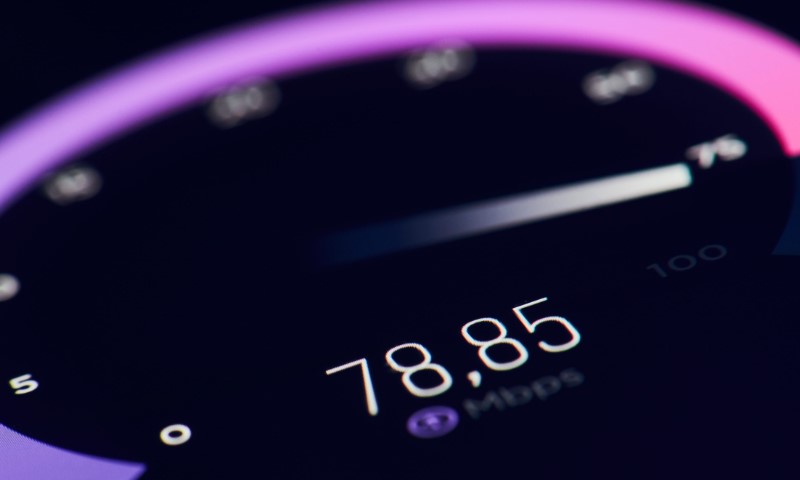
Choosing an internet plan becomes easier once advertised download speeds are compared against realistic household activity.
| Internet speed | Best for | Main limitation |
| 100 Mbps | Moderate streaming, gaming, and browsing | Limited room for heavy simultaneous downloads |
| 300 Mbps | Families combining streaming, remote work, and gaming | Some capacity may go unused |
| 500 Mbps | Heavy users and frequent large downloads | Higher cost with fewer noticeable daily benefits |
Every speed tier has a practical purpose. However, paying for additional bandwidth makes sense only when household activity can actually take advantage of it.
100 Mbps – Better Than You Might Expect
A 100 Mbps connection might sound modest next to gigabit internet advertisements, but it can handle an impressive amount of everyday activity.
Multiple HD streams, video calls, online gaming, and routine browsing can all operate comfortably on a well-performing 100 Mbps connection.
Even two simultaneous 4K streams might consume only half its available download bandwidth.
YouTube’s recommendations make that calculation even more interesting. Its suggested sustained speed for 4K playback is 20 Mbps, meaning two simultaneous streams would require approximately 40 Mbps.
That’s only 40% of a 100 Mbps connection’s advertised download capacity, leaving plenty of theoretical room for everyone else’s online activities.
Problems become more likely when several demanding activities overlap. A large game download, multiple 4K streams, and cloud synchronization could collectively push usage toward the connection’s limit.
At that point, congestion can cause buffering, slower downloads, or temporary performance problems.
Still, families focused on affordability shouldn’t dismiss 100 Mbps simply because providers have decided bigger numbers look better in advertisements.
For moderate users, it could be all they need.
300 Mbps – The Sweet Spot for Most Families
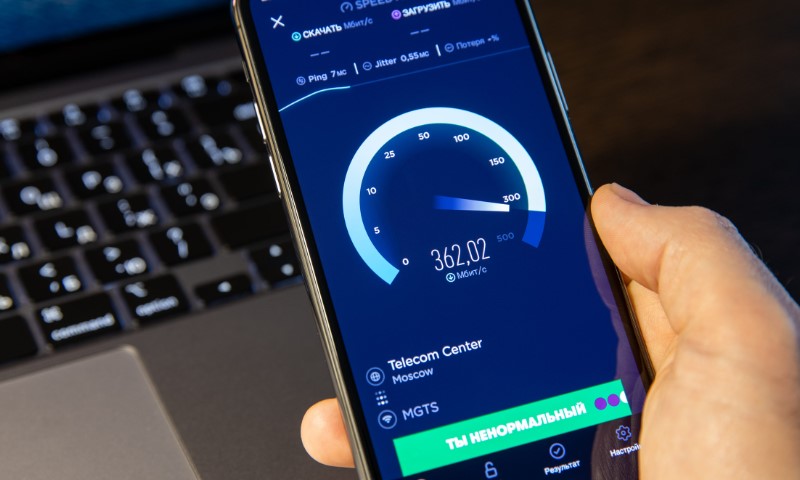
A 300 Mbps plan provides three times the download bandwidth of a 100 Mbps connection.
That’s a substantial increase, particularly for households where several people regularly use demanding online services.
Multiple 4K streams, remote meetings, gaming sessions, and background downloads have considerably more room to operate without competing for the same limited capacity.
Recommendations of approximately 200-300 Mbps for average households make sense in that context.
Most families probably won’t use all 300 Mbps continuously. In fact, that unused capacity is part of its practical value.
Temporary download spikes become less disruptive, and household members generally don’t need to coordinate their online activities.
At 300 Mbps, deciding who gets to stream something in 4K should rarely become a family negotiation.
Still, actual value depends on pricing. A 300 Mbps plan costing considerably more than a perfectly adequate 100 Mbps connection isn’t automatically the smarter purchase.
500 Mbps – Useful Upgrade or Unnecessary Luxury?
View this post on Instagram
A 500 Mbps connection provides approximately 67% more download bandwidth than a 300 Mbps plan.
That’s genuinely useful extra capacity, but only for households capable of putting it to work.
Frequent downloads of large games, substantial file transfers, and several demanding activities happening simultaneously can justify the upgrade.
Families with multiple gamers, content creators, or people regularly handling large work files might appreciate the additional bandwidth.
However, watching a 4K movie won’t suddenly become more detailed simply because the connection supports 500 Mbps instead of 300 Mbps.
Likewise, websites won’t necessarily load noticeably faster, and multiplayer games won’t automatically experience lower latency.
Even cloud gaming, which actually streams gameplay over the internet, doesn’t always require enormous bandwidth. Sony lists a minimum of 13 Mbps for 1080p PlayStation Portal cloud streaming.
That’s less than 3% of a 500 Mbps connection’s advertised capacity. Connection stability still matters, of course, but the bandwidth requirement alone hardly makes a convincing argument for buying the fastest available plan.
Once an application has sufficient bandwidth, additional download capacity often produces diminishing returns. A 500 Mbps plan makes the most sense when the household regularly encounters bandwidth limitations or when the price difference is relatively small.
Otherwise, families might simply be paying extra for a number they rarely approach.
How Much Difference Does Faster Internet Actually Make?

Downloading a 50 GB game provides a particularly useful demonstration of what additional bandwidth actually buys.
Unlike watching a movie or browsing websites, downloading a large file can potentially use nearly all available download capacity.
Consider how long that same game would take to download across three different plans.
| Internet plan | Theoretical download time for 50 GB |
| 100 Mbps | 66 minutes, 40 seconds |
| 300 Mbps | 22 minutes, 13 seconds |
| 500 Mbps | 13 minutes, 20 seconds |
Calculations assume decimal gigabytes, sustained advertised download speeds, and no network overhead or other bottlenecks. Actual downloads generally take longer.
Moving from 100 Mbps to 500 Mbps could theoretically reduce download time by more than 53 minutes.
That’s a substantial improvement, especially for gamers dealing with enormous installation files and frequent updates.
Even jumping from 300 Mbps to 500 Mbps saves nearly nine minutes on a 50 GB download.
But here’s the question providers rarely put in their advertisements. How often does an average family actually download 50 GB?
Someone installing several large games every week might find faster internet extremely valuable. A household primarily watching Netflix, browsing websites, and attending video calls probably won’t experience anything close to the same benefit.
A 4K stream requiring 25 Mbps doesn’t magically consume 100 Mbps just because additional capacity is available.
Faster connections primarily improve tasks that can actually use the extra bandwidth. For everything else, paying for more speed can produce remarkably little visible improvement.
Closing Thoughts
For most four-person households, 300 Mbps offers an excellent balance between speed, flexibility, and practical value.
It provides enough capacity for multiple streams, gaming sessions, video meetings, and occasional large downloads without constantly approaching the connection’s limits.
However, that doesn’t make 100 Mbps inadequate.
Families with moderate usage and predictable online habits can often operate comfortably on 100 Mbps, particularly when affordability takes priority.
Meanwhile, 500 Mbps becomes attractive when large downloads are frequent, multiple demanding activities regularly overlap, or the monthly price difference is relatively small.
Future demand could change these calculations.
Broadband competition is changing too. Starlink has grown to 12 million broadband customers while expanding its ambitions into the wireless market.
More competition could eventually give households additional choices, although availability, pricing, and performance will continue to vary considerably between providers.
Still, families should base purchasing decisions on measurable household needs rather than hypothetical future problems.
Internet providers are getting remarkably good at selling bigger numbers. Figuring out how many of those megabits a family actually needs is considerably more interesting.
Figures reflect the sources and time periods cited in this story. It is general information, not financial or investment advice.