U.S. Data Centers Could Use Nearly 12% of America’s Electricity by 2030
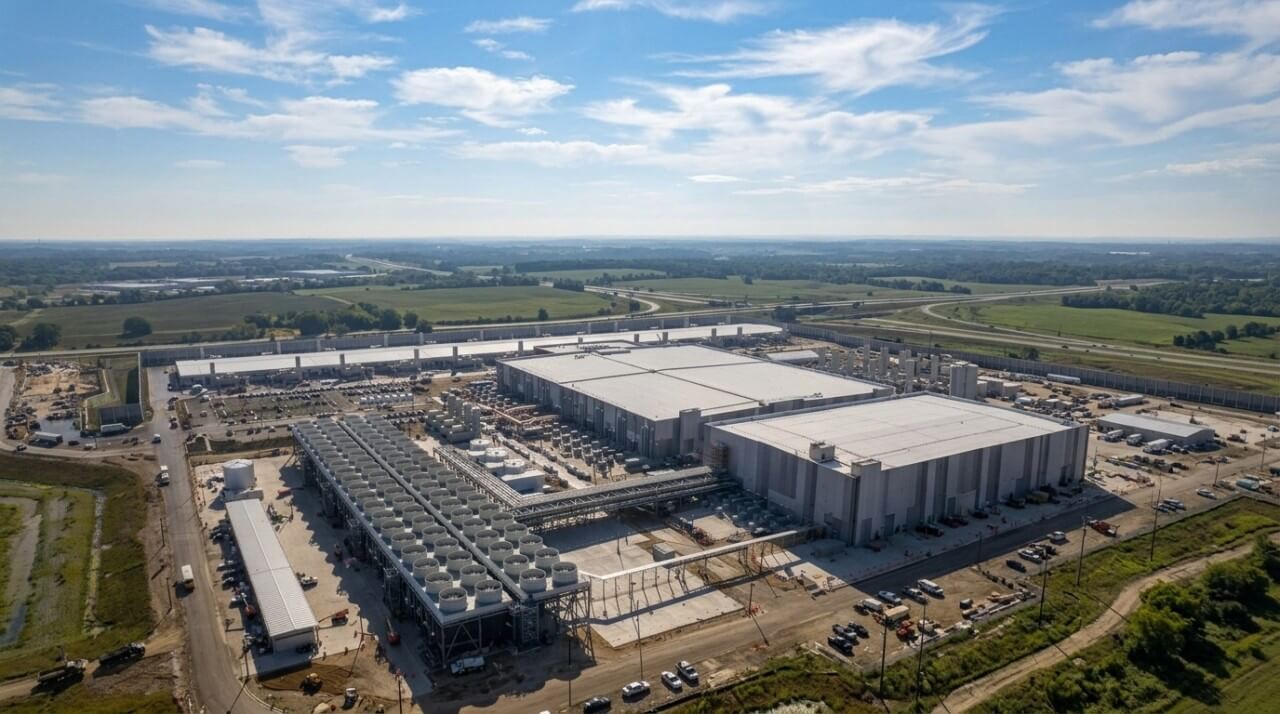
America’s data centers could consume nearly 12% of the country’s electricity by 2030. Apparently, teaching computers to think also involves giving them a fairly spectacular appetite.
A June 2026 report projects that data centers could account for 11.8% of U.S. electricity consumption by 2030, compared with approximately 4.7% in 2024.
That’s an increase of 7.1%, putting their projected share at roughly 2.5 times its earlier level.
Under the report’s reference scenario, annual data center electricity consumption could reach approximately 649 terawatt-hours (TWh).
AI companies have spent years competing over whose models are smartest. Their next competition might involve something considerably less glamorous: finding enough electricity to keep those models running.
Data Center Electricity Demand Is Growing Faster Than Expected
Lawrence Berkeley National Laboratory’s latest projections suggest that data centers could account for anywhere between 9.5% and 15.3% of U.S. electricity consumption by 2030, with 11.8% representing its reference scenario.
Actual consumption will depend on hardware deployment, operating conditions, and improvements in energy efficiency.
Another major assessment points in a similar direction.
Electric Power Research Institute (EPRI) projections released in February 2026 suggest data centers could consume 9% to 17% of U.S. electricity generation by 2030.
Even more interesting, EPRI’s updated demand estimates were approximately 60% higher than its forecasts two years earlier.
Researchers aren’t necessarily contradicting one another. Different projections rely on different assumptions about construction schedules, equipment shipments, computing capacity, and future electricity requirements.
Still, the direction is difficult to ignore.
Data centers are becoming a much larger part of America’s electricity equation, and researchers keep revising their expectations as companies announce additional facilities.
Why AI Is Turning Data Centers Into Electricity-Hungry Giants
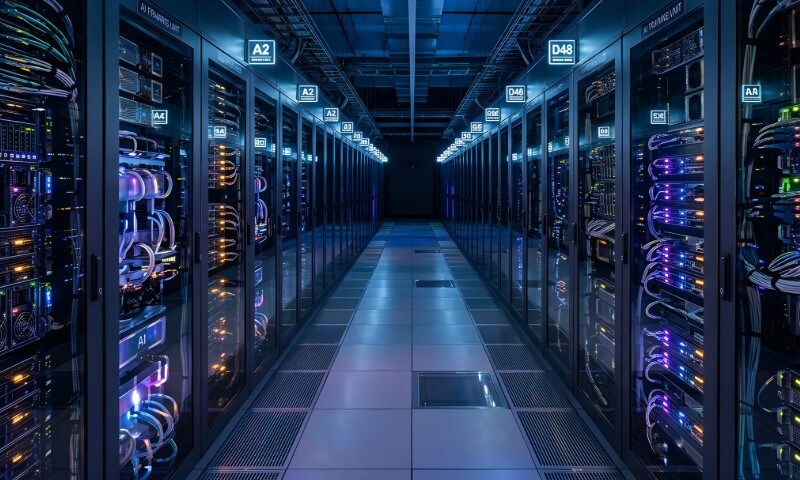
Traditional data centers already require considerable electricity to operate servers, store information, and handle internet traffic.
Artificial intelligence adds another demanding customer.
Training large AI models involves enormous numbers of calculations performed by specialized processors, including graphics processing units (GPUs) and AI accelerators. Running those models also consumes power, especially as millions of people use AI systems to generate text, images, videos, and other content.
More computing equipment means more electricity. Cooling systems, networking hardware, and other supporting equipment add to the total.
Federal energy modeling assumes cooling in data center spaces can be up to 2.9 times as energy-intensive as cooling in other commercial building spaces, on average.
More Efficient AI Chips Might Not Solve the Problem
Chip manufacturers are constantly improving computing performance per watt.
Sounds promising, right?
Unfortunately, greater efficiency doesn’t guarantee lower overall electricity consumption.
Imagine that a new processor completes twice as many calculations using the same electricity. Companies could reduce their energy requirements, or they could deploy substantially more computing capacity.
AI developers appear particularly enthusiastic about the second option.
Growing demand for image generation, video generation, and increasingly complex AI applications could outpace efficiency improvements.
Saving electricity per calculation is useful. Saving electricity while performing more calculations exponentially is considerably harder.
America’s Power Grid Wasn’t Built for This Kind of Growth
For years, U.S. electricity demand experienced relatively modest growth. Now, data centers, expanding manufacturing activity, and the electrification of transportation and buildings are changing that pattern.
Department of Energy assessments have outlined scenarios involving approximately 15% to 20% growth in U.S. electricity demand over a decade.
Data centers create a particularly complicated challenge because many require enormous amounts of electricity throughout the day.
Unfortunately, installing a new rack of AI processors can happen considerably faster than constructing a major transmission line.
Virginia Could Face an Especially Large Increase
Virginia already hosts one of America’s largest concentrations of data centers, with facilities accounting for approximately 25% of the state’s electricity consumption in EPRI’s 2026 assessment.
Depending on the scenario, that share could rise to roughly 39% to 59% by 2030.
A national projection near 12% suddenly looks rather modest.
Seven additional states could see data centers account for more than 20% of electricity consumption:
- Arizona
- Indiana
- Iowa
- Nebraska
- Nevada
- Oregon
- Wyoming
Such concentrations matter because electricity infrastructure operates within regional networks, not as one enormous national extension cord.
Rapid growth in a particular area can require major upgrades even when sufficient generating capacity exists elsewhere.
Could Consumers End Up Paying for the AI Boom?
Building electricity infrastructure costs money, and somebody eventually has to pay for it.
New generating facilities, transmission lines, substations, and other upgrades can involve billions of dollars in investment.
Regulators are increasingly examining how those costs should be distributed among technology companies, utilities and existing electricity customers.
Federal Energy Regulatory Commission proceedings have also addressed concerns about the costs and reliability implications of connecting large electricity users to the grid.
However, more data center electricity demand does not automatically translate into higher household bills.
Actual impacts depend on regional electricity markets, utility regulations, infrastructure investment and cost-sharing agreements.
Data centers can also attract private investment, create construction jobs and generate local tax revenue.
Still, an uncomfortable question is developing alongside the industry.
If technology companies require enormous infrastructure upgrades, how much of that expense should ordinary electricity customers be expected to cover?
I suspect that question will become considerably louder as additional projects seek grid connections.
The Search for New Power Sources Is Getting Interesting
Energy companies and technology developers are investigating several approaches to supporting growing data center electricity demand.
Solar and wind projects can expand generating capacity, while battery systems help manage differences between electricity production and consumption.
Batteries have an important limitation, though. They store electricity rather than generate it.
Nuclear and geothermal energy offer possibilities for more consistent low-carbon electricity production, although project costs, development schedules and geographic constraints can complicate deployment.
Natural gas is also expected to play a major role in near-term capacity additions under some EPRI scenarios.
Potential approaches include:
| Technology | Potential contribution | Main limitation |
| Solar and wind | Additional electricity generation | Variable output |
| Battery storage | Shifts electricity to periods of higher demand | Limited storage duration |
| Nuclear power | Consistent low-carbon generation | High costs and lengthy construction |
| Geothermal | Continuous electricity production | Location and development constraints |
| Natural gas | Dispatchable generating capacity | Fuel costs and emissions |
| Hydrogen fuel cells | On-site electricity generation | Hydrogen supply and cost |
Hydrogen Fuel Cells Could Offer Another Option
One particularly interesting development involves hydrogen fuel cells.
Unlike conventional generators that burn fuel, hydrogen fuel cells produce electricity through an electrochemical reaction involving hydrogen and oxygen.
Water and heat are produced during operation.
Platinum catalysts help accelerate the chemical reactions involved, but platinum is expensive. Conventional catalyst nanoparticles can also deteriorate over time, creating problems for performance and durability.
Research announced by Washington University scientists in August 2026 introduced a platinum-cobalt catalyst supported by a specially engineered carbon structure. During laboratory testing, the catalyst retained 85% of its performance after 150,000 voltage cycles.
Researchers designed the carbon support to improve durability while maintaining efficient electrochemical activity.
That’s an encouraging result for fuel-cell technology.
It is not, however, a demonstration that America’s AI facilities can immediately switch to hydrogen power.
Will Data Centers Really Reach 12% by 2030?
An 11.8% electricity share is a projection, not a scheduled appointment. Several factors could prevent data center electricity demand from reaching that level.
Not every announced facility will necessarily be completed. Construction delays, equipment shortages, labor constraints and limited electricity availability could slow expansion.
Improvements in computing efficiency might also reduce the electricity required for individual AI workloads.
EPRI’s scenarios demonstrate how much project completion matters. Its lower-growth scenario assumes most facilities under construction become operational, alongside only one-quarter of projects in advanced planning.
Its higher-growth scenario assumes a much larger portion of proposed capacity becomes operational.
Yet demand could also exceed expectations.
Faster AI adoption, increasingly computation-intensive applications and additional specialized processors could push electricity consumption toward higher scenarios.
Berkeley Lab’s 15.3% upper projection demonstrates how substantial that uncertainty could become.
Planned computing capacity and electricity actually consumed are two different measurements.
My guess is that access to electricity will increasingly influence where companies build data centers, how quickly projects launch and which proposed facilities actually become operational.
Figures reflect the sources and time periods cited in this story. It is general information, not financial or investment advice.