Roku Makes Money From the Streaming Buttons on Your Remote
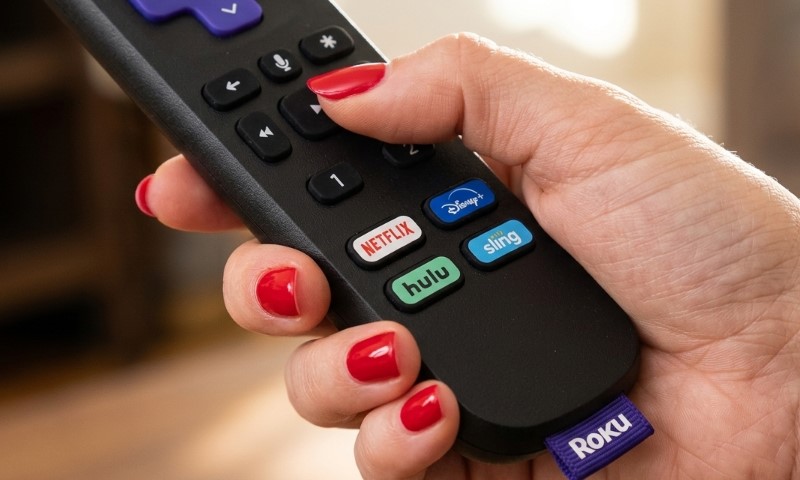
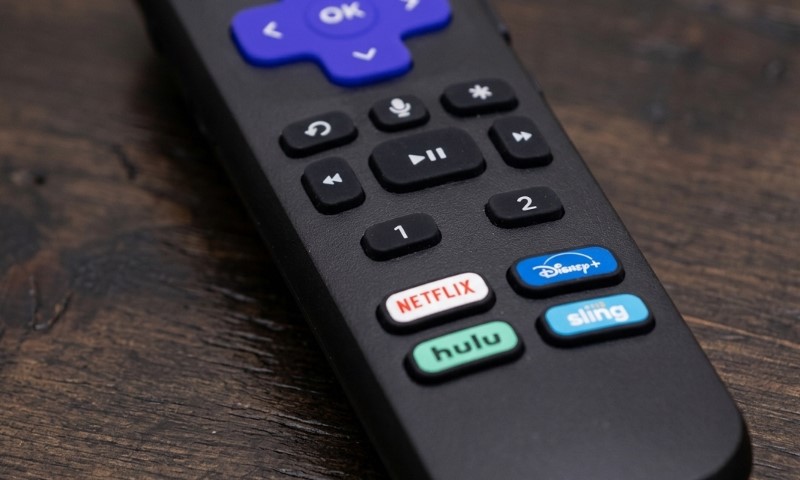
Four little buttons on a Roku remote could be worth up to $4 in advertising revenue. Not because you keep pressing them, but because streaming companies reportedly pay to have their names printed on them.
Back in 2019, a report indicated that streaming services paid Roku around $1 per customer for a dedicated shortcut button. With four branded buttons on many remotes, that creates a potential $4 advertising opportunity per remote, assuming each placement carries the reported fee.
Multiply that possibility across millions of devices, and suddenly those tiny pieces of plastic look rather interesting.
Apparently, selling streaming hardware wasn’t enough. Roku also figured out how to sell advertising space on the thing you use to control it.
And in 2022, those buttons became important enough to show up in the company’s financial expectations.
How Roku Actually Makes Money From Those Buttons
Most people see a Netflix or Disney+ button and assume it’s there for convenience. Press it, open the app, and skip the business of scrolling through menus.
Convenience is certainly part of the deal. Advertising is the other part.
Streaming services pay Roku for dedicated positions on its remote controls. A branded button gives a company a permanent shortcut into its app, putting its name directly beneath the customer’s thumb.
Unlike a digital advertisement that disappears after a few seconds, a physical button can sit on someone’s coffee table for years.
Space is also limited. Many Roku remotes feature four dedicated streaming shortcuts, meaning only a handful of companies can secure those positions.
According to figures reported in 2019, streaming companies paid approximately $1 per customer for each dedicated button.
Historical reported pricing and an illustrative calculation, not verified current rates or actual revenue per remote.
Importantly, Roku isn’t necessarily collecting another dollar every time someone presses Netflix. Reported payments concern placement, not a confirmed fee for each click.
Still, turning four shortcuts into advertising inventory without displaying a single extra banner ad is quite a business trick.
Roku Was Never Just a Hardware Company
Roku might look like a company that sells little boxes and streaming sticks, but its financial filings were telling a more interesting story years before the button controversy.
Historically, Roku divided its business into two major segments.
Player revenue covered hardware sales. Platform revenue included advertising, subscription-related payments, and other activities connected to its streaming ecosystem.
By 2017, that second category was already becoming a considerably bigger deal.
During the full year of 2016, Roku’s platform business accounted for approximately 26% of total revenue. During the first half of 2017, its share reached roughly 41%.
Historical revenue shares reported around Roku’s 2017 IPO. Periods cover different lengths of time.
That’s a 15-percentage-point increase in platform revenue’s share, not a 15% increase.
It also doesn’t automatically mean hardware revenue fell by 15%. We’re looking at the proportions of total revenue, not equivalent changes in dollar sales.
But the direction is difficult to miss.
Roku was increasingly making money by connecting audiences with advertisers and streaming services, rather than relying exclusively on device purchases.
Home-screen advertising, video advertising, subscription commissions, and licensing arrangements with television manufacturers all contributed to that business model. Paid remote buttons fit neatly into the same picture.
Hardware gets Roku into the living room. Access to the viewer creates additional opportunities to earn money.
Fewer Roku Devices Mean Fewer Valuable Buttons
Here’s where the story gets particularly entertaining.
During the second quarter of 2022, Roku reported 63.1 million active accounts. That’s an enormous audience for a company that many consumers still associated primarily with inexpensive streaming hardware.
Yet weaker-than-expected player sales created an unusual problem.
Roku wasn’t simply dealing with disappointing hardware performance. Its chief financial officer identified lower expectations for branded remote-control button revenue as a factor affecting the company’s financial outlook.
Yes, remote-control buttons had become relevant to an earnings discussion.
Lower device sales can reduce opportunities to collect placement revenue when payments depend on distributing new remotes.
Imagine a streaming company paying for access to customers through dedicated buttons. If fewer eligible devices reach consumers than anticipated, revenue associated with those placements could fall short of expectations.
Exact results depend on the commercial agreements, which aren’t fully public.
One important distinction is that 63 million active accounts did not mean Roku sold 63 million new remotes that quarter.
Active accounts measure the platform’s user base. New hardware sales and remote distribution are separate figures.
Still, the connection is fascinating. Roku had developed a business in which selling fewer streaming devices could also mean collecting less money for the advertising printed on their remotes.
Somehow, the streaming industry’s competition for your thumb had entered corporate financial forecasting.
Customers Get Convenience, but Not Necessarily Choice
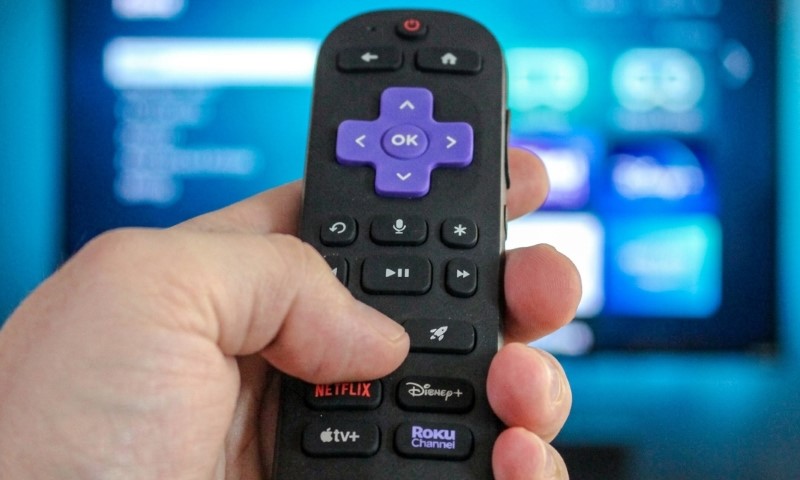
Anyone who regularly uses the services printed on their Roku remote probably appreciates the shortcut buttons.
One press and you’re watching something. No searching required. Problems begin when those buttons don’t match the customer’s subscriptions.
Imagine owning a remote with four dedicated shortcuts when you only use two of the services. Half your convenient buttons are now advertising for companies you don’t pay.
On the fixed-button remotes covered by the reporting, customers generally couldn’t freely reassign those branded shortcuts to different apps.
That’s a curious arrangement for a product somebody purchased.
Roku’s commercial relationships help determine which services get prominent physical positions, while individual preferences may have little influence over those choices.
Of course, customizable shortcuts wouldn’t necessarily generate the same promotional value for streaming companies.
And that’s precisely the conflict.
A remote designed primarily around customer preferences might look different than one designed partly around advertising agreements.
I’d happily trade an unused streaming shortcut for a programmable button. I suspect plenty of other viewers would, too.
Your Roku Remote Has a Business Model of Its Own
Next time you pick up a Roku remote, take another look at those streaming shortcuts.
Every branded button represents something more interesting than a quick way to open an app. It’s a potential revenue opportunity built directly into a physical product.
Roku managed to sell hardware while also monetizing valuable space on that hardware. By 2022, expectations for those placements had become important enough to feature in its financial discussion.
Not bad for four buttons most people barely notice.
Convenience and advertising can work surprisingly well together, at least while customers are happy with the arrangement.
But here’s the question I’d like Roku to answer: If viewers could choose all four shortcuts themselves, how many of those paid streaming buttons would survive?
Figures reflect the sources and time periods cited in this story. It is general information, not financial or investment advice.